PropTech · Real Estate · AI
Turning a real estate MVP into a $2M ARR presentation engine.
Henry is an AI-native presentation tool for real estate teams — helping them create market-ready decks in hours, not days. I was the sole designer for 10 months, taking it from MVP to product-market fit.
Used by teams at







9 projects, 12 months
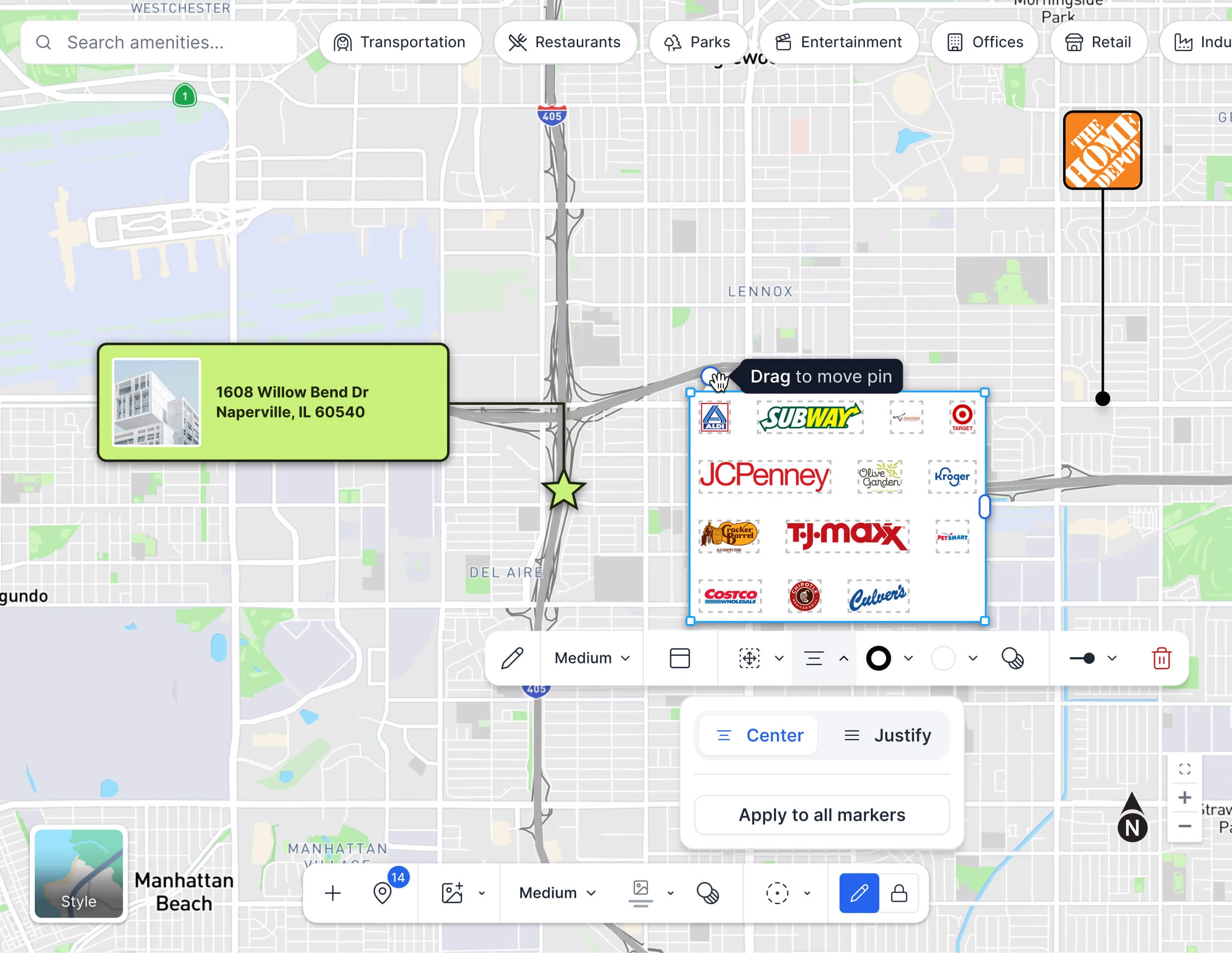
Maps
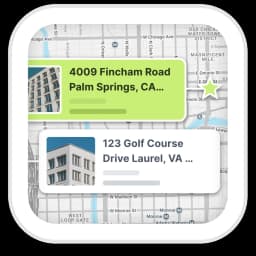
Introduced more tools to make map slides which almost fully eliminated the need to do maps outside the platform.
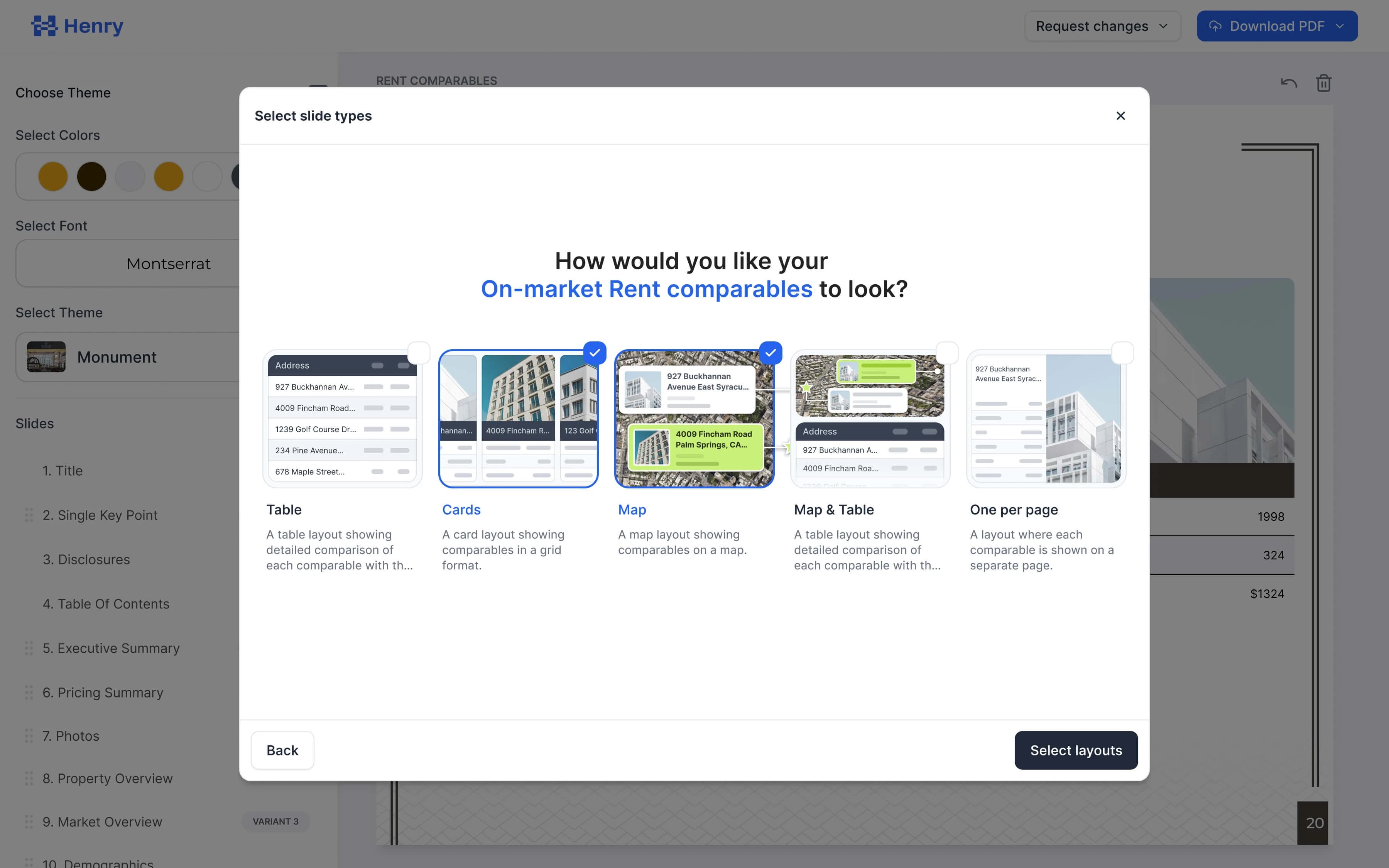
Comparables
Automation for property/land comparables to speed up adding & managing them. Major win was a comps smart slide wizard. Learned that syncing values across slides causes a lot of trouble.
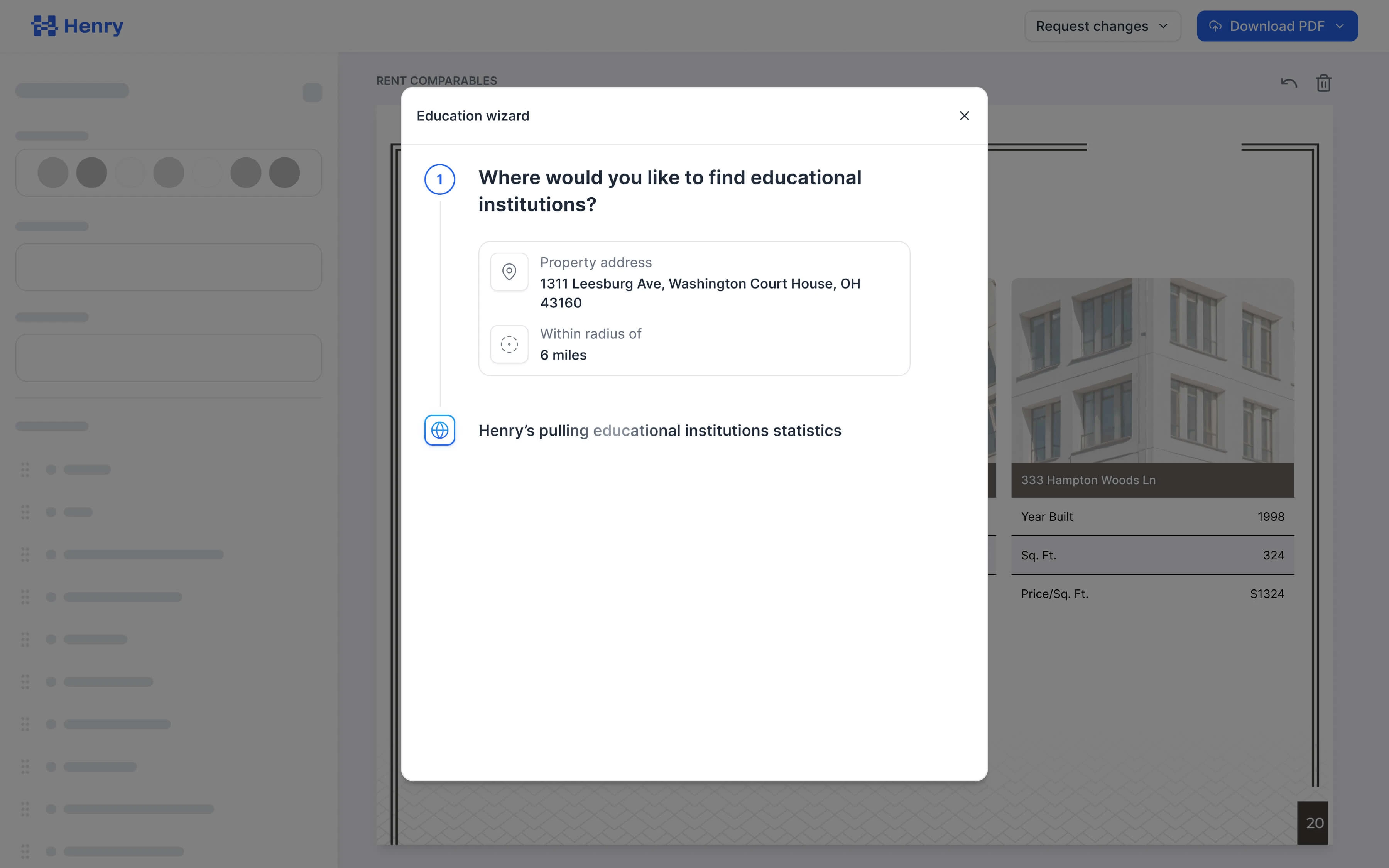
More Wizards
To simplify other processes we used more wizards — guiding users to provide info needed, then giving them control over the results.
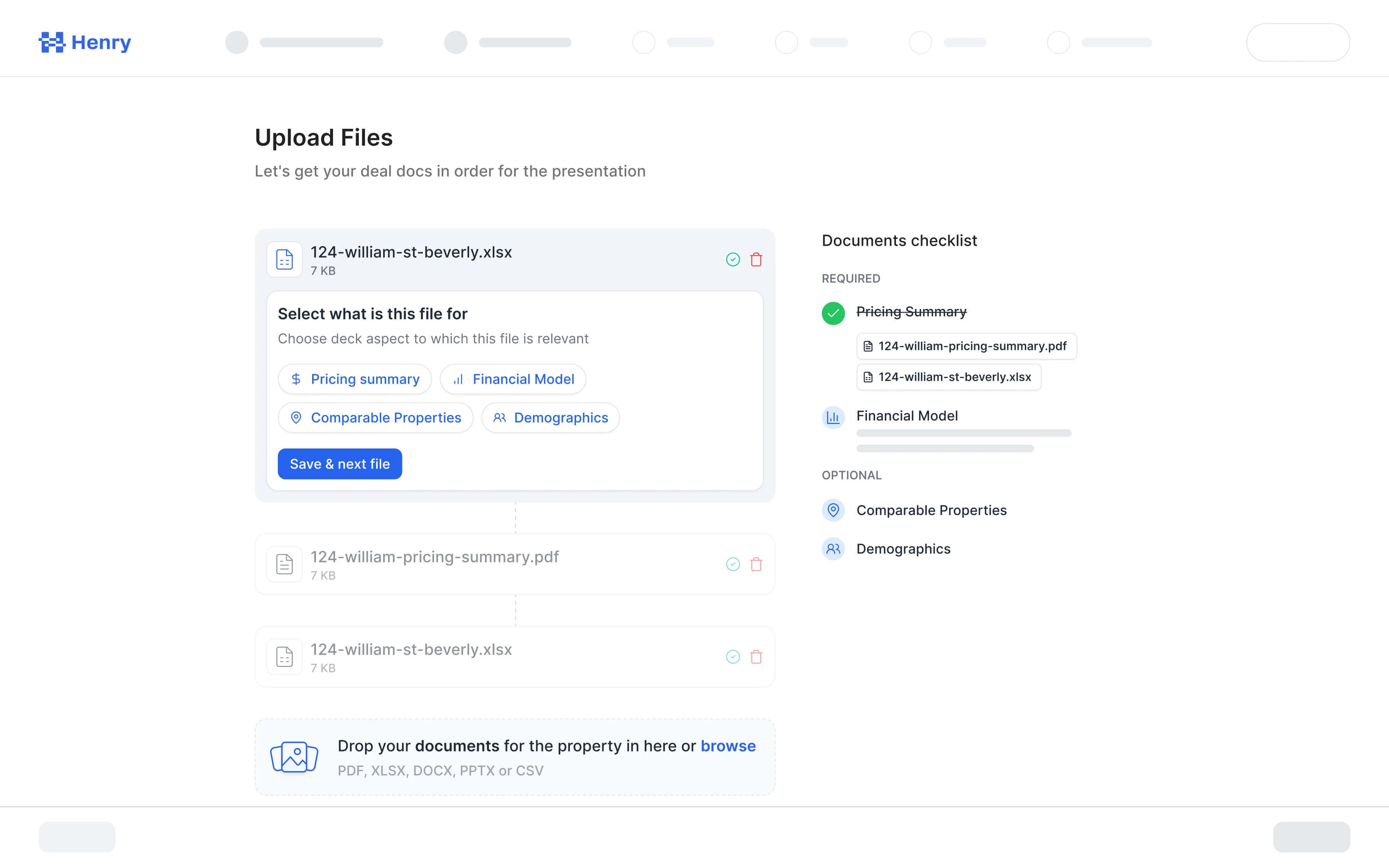
File Labeling
Added a step to label uploads during presentation creation → reduced irrelevant content significantly but didn't fully solve the problem.
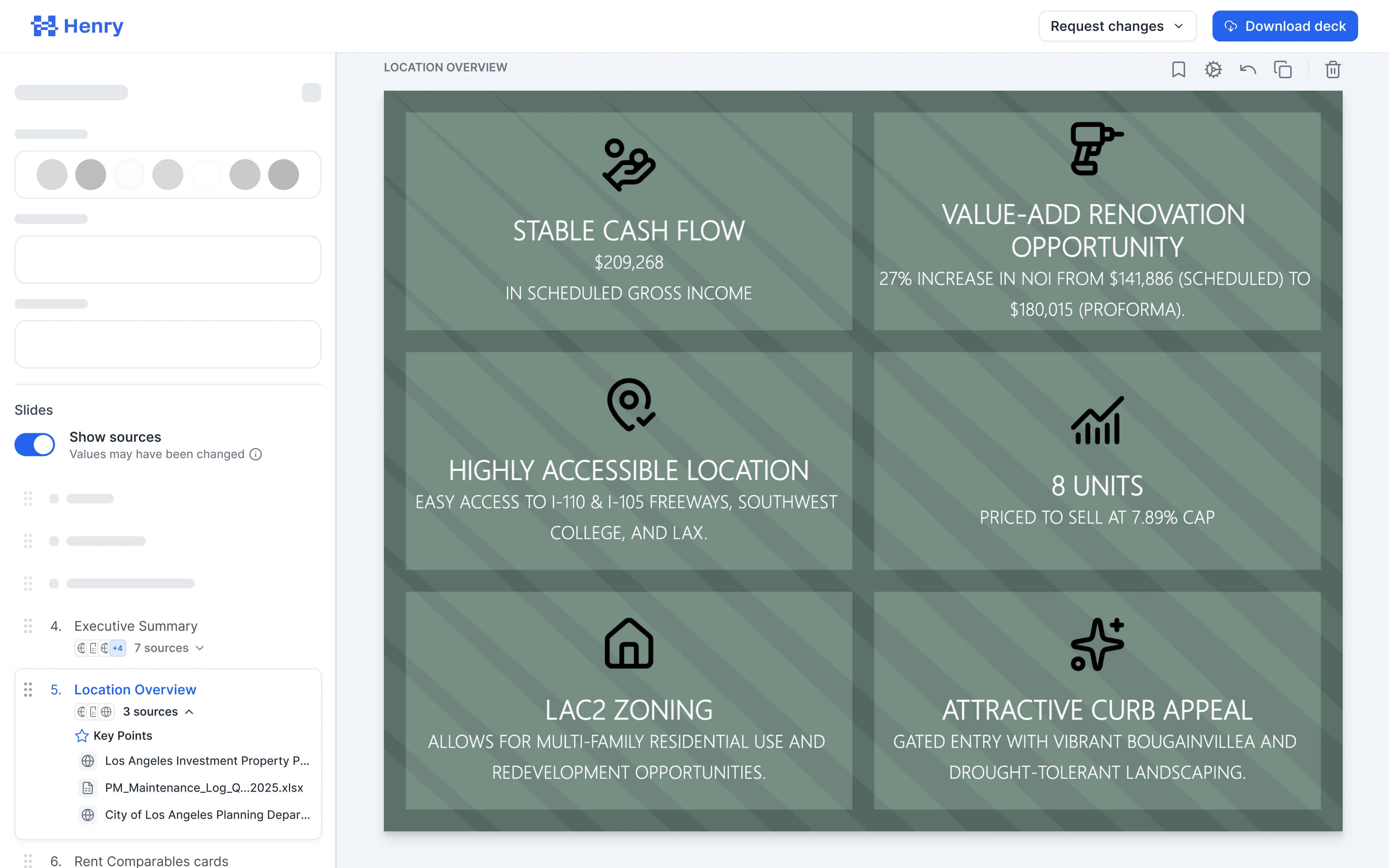
Data Sources
Users wanted certainty about the info on their slides. Designed a data sources view with a future-ready architecture. Users approved it in testing.
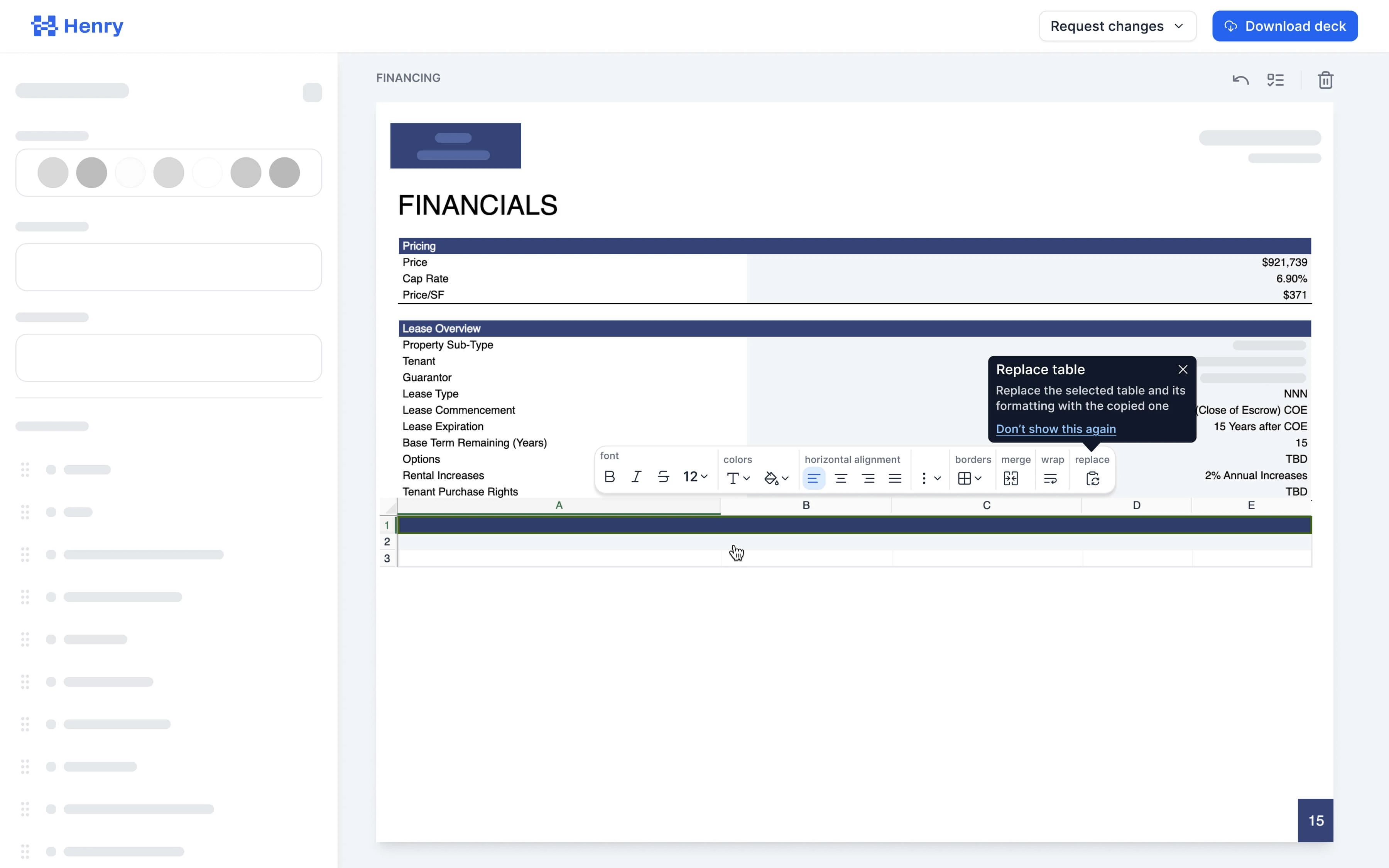
Copy-Paste Logic
A usability issue that limited every user group differently. Conducted research, defined the optimal workflow, and mapped the implementation path.
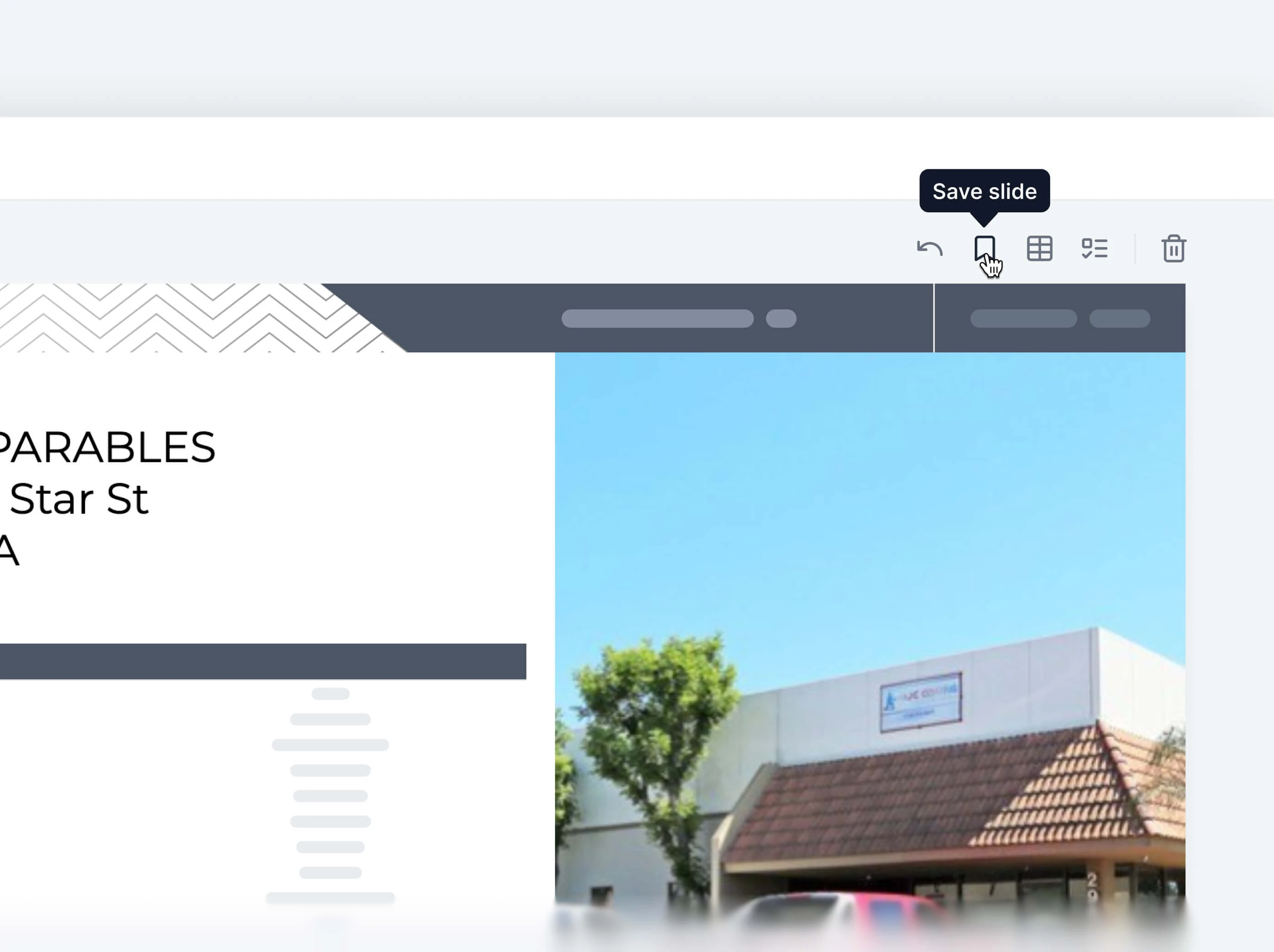
Adding & Reusing Slides
The 'Add Slide' modal became a mess as slide types multiplied. Redesigned it and introduced saved slides to stop users from recreating the same slides over and over.
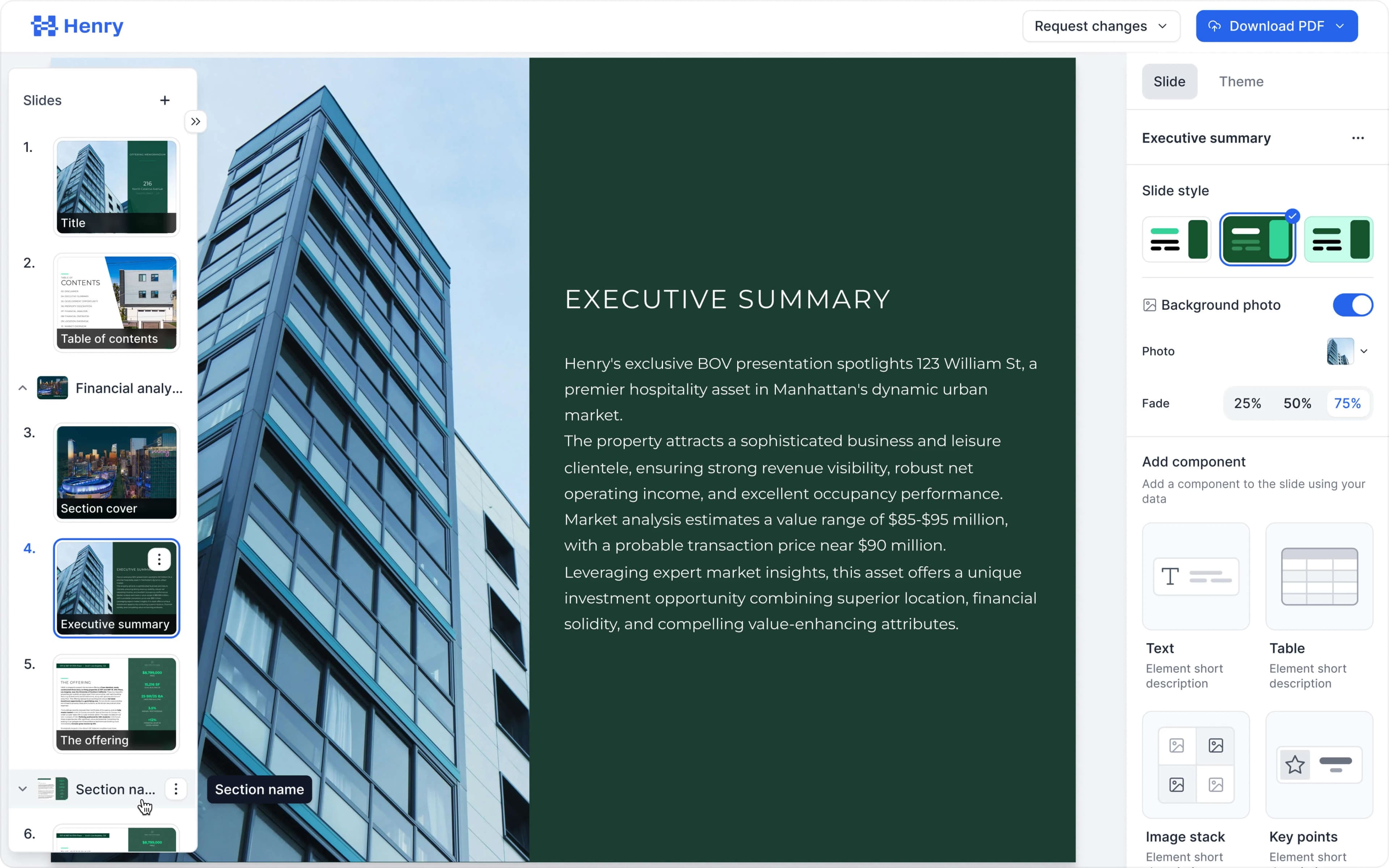
Editor Experience
Started with an ambitious full redesign idea, quickly realized small steps made more sense, and shipped a lot of meaningful improvements along the way.
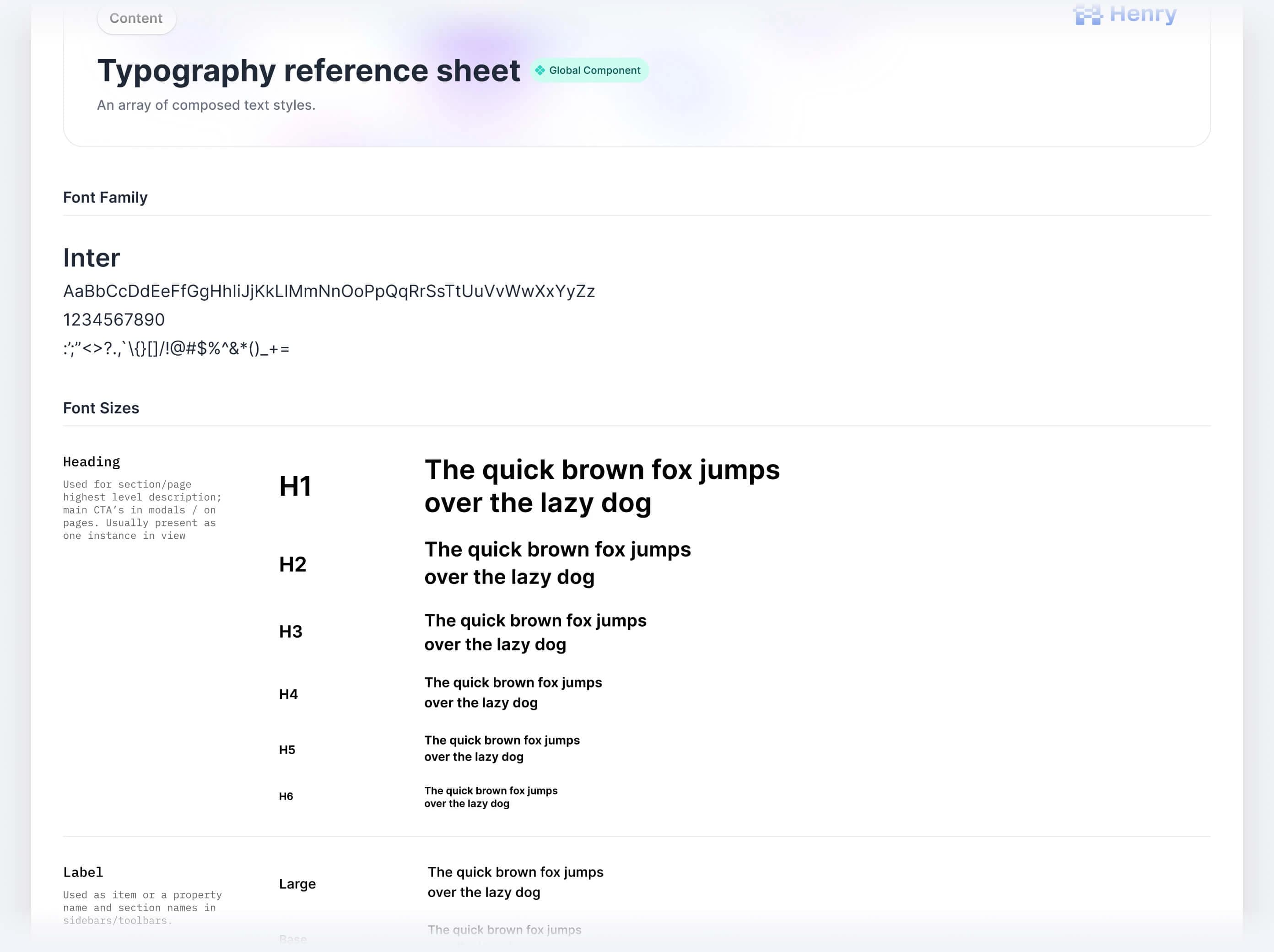
New UI Style & Design System
Established a design system from day one to keep design–dev consistency, then reworked the creation flow to align with a new brand direction.
The numbers speak for themselves
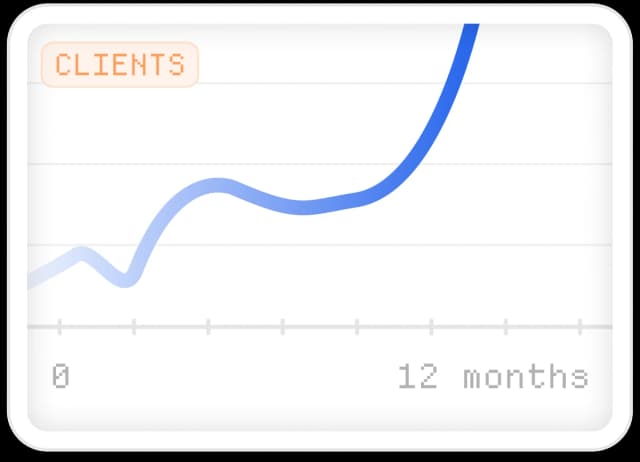
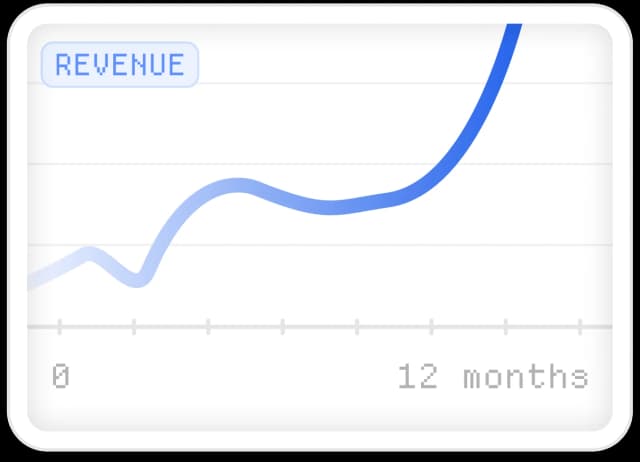
Revenue Growth
Helped to scale from $5k to $2M in 12 months. One of the fastest ARR ramps in the real estate SaaS space.
Maps Adoption
of maps done on-platform
Fundraising
Contributed to raising more than
$20M+in investments
Time-to-Presentation
Average per presentation
Presentations with Maps
of all ordered decks
What I learned
Freedom vs. Automation
Auto-syncing data across slides sounded great on paper. Users hated it. They wanted control over what updated and when — familiar patterns beat clever automation.
Low Hanging Fruits Win
The fastest path to user satisfaction was small, high-confidence improvements. Fixing a confusing interaction or a slow workflow compounded into meaningful KPI gains.
Domain Knowledge is Non-Negotiable
Real estate professionals have deeply ingrained workflows from Microsoft Office. Designing against those patterns — however logical — always backfired.
PRDs Are a Design Tool
Writing a detailed PRD forced clarity on scope, edge cases, and trade-offs. It became a collaboration hub for eng and product — surfacing gaps before any pixel was drawn.
Incremental Beats Ambitious
QoL improvements, componentisation, and small usability fixes drove more actual adoption than big redesigns. Growth is built brick by brick.
Metrics Define What 'Better' Means
Without knowing which KPIs to move, any design decision is just opinion. Learning which metrics mattered — and why — was what turned design into a growth lever.

That was an amazing year.
I loved working on Henry and with that team. Product and user goals were met, and I came out a substantially better designer. The startup grind taught me things no portfolio or classroom ever could.